Raising Canes
| Original use | Fast-food restaurant specializing in chicken fingers |
|---|---|
| First created | 1996 |
| Country of origin | United States |
| Core menu item | Chicken fingers, crinkle-cut fries, coleslaw, Texas toast, Cane's Sauce |
| Typical service style | Counter service, drive-thru |
| Typical seating | Casual, limited table service |
| Primary architectural feature | Often features a distinctive red-and-white color scheme and a stylized rooster logo |
Origin and history
Raising Cane's Chicken Fingers is an American fast-food restaurant chain specializing in chicken finger meals. It was founded in Baton Rouge, Louisiana, in the late 1990s. The chain's creation is credited to entrepreneur Todd Graves, who developed the simple menu concept while working in the salmon fishing industry in Alaska. The original restaurant opened near the Louisiana State University campus, targeting the student population with a limited, focused offering. The brand's name is derived from Graves' yellow Labrador retriever, Raising Cane. From this single location, the chain has expanded significantly across the United States and into international markets, maintaining its core menu throughout its growth.
What it is for
Raising Cane's operates as a quick-service restaurant focused exclusively on a menu centered on chicken fingers. The primary function of the restaurant is to provide a consistent, simple meal built around its signature fried chicken fingers. The chain is designed for efficient counter-service ordering and rapid meal preparation, with no traditional table service or reservation system. Its purpose is to offer a predictable dining experience where the core product is always the same, accompanied by a specific set of sides and sauces. The model is built for speed and convenience, catering to customers seeking a familiar meal without complex choices. As a business, it leverages a limited menu to achieve operational efficiency and strong brand recognition around a single product type.
Pros and cons
A primary advantage of Raising Cane's is its consistent product quality and streamlined operation, which reliably delivers the same meal across all locations. The limited menu reduces decision fatigue for customers and simplifies kitchen logistics. However, the most significant con is the lack of menu variety, which can be a drawback for groups with diverse tastes or for individuals seeking healthier options, as the offerings are uniformly centered on fried food. Customers who dislike fried chicken fingers, the proprietary Cane's Sauce, or coleslaw will find very few alternatives. The common mistake is for a first-time visitor to expect a broader fast-food menu, leading to disappointment if the signature items are not to their liking. Furthermore, during peak hours, the focus on a single product can sometimes lead to longer wait times as demand concentrates on the same few items.
Who it suits
Raising Cane's suits customers who prioritize consistency and have a strong preference for its specific style of fried chicken fingers and signature sauce. It is well-suited to individuals and families seeking a predictable, quick meal without the need for menu exploration. The chain particularly appeals to younger demographics, including students and young adults, who often favor its straightforward, craveable offerings. It is a practical choice for groups where everyone enjoys the core product, as the shared menu simplifies ordering. The restaurant does not suit those seeking a varied dining experience, lighter fare, or customization, as the menu is intentionally inflexible. It is also less ideal for formal gatherings or occasions requiring reservations, as its service model is strictly counter-service and designed for casual, on-the-go consumption.
Latest Raising Canes news
Latest reporting
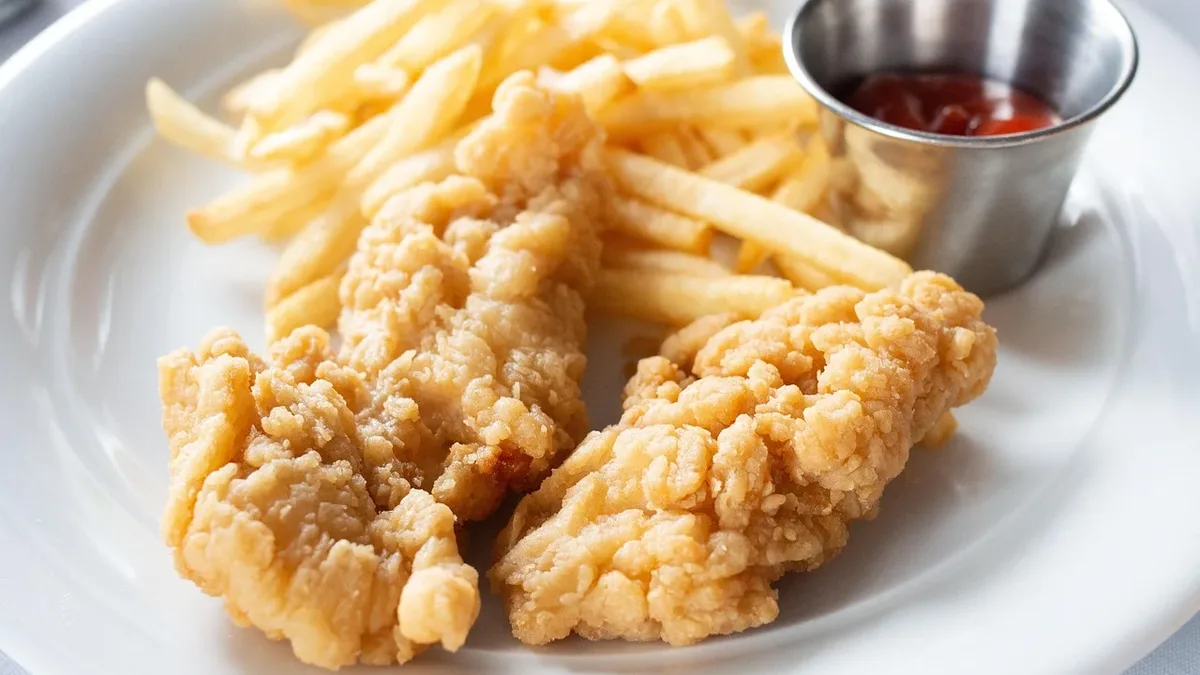
Chicken Tender Quality Drives Chain Restaurant Competition
Major U.S. chains are intensifying their focus on chicken tender quality, with a new drive-thru study ranking Raising Cane's first for food quality...

Zaxbys Sauce Vending Machine Debuts in NYC
Zaxbys launched a sauce vending machine at a competitor's NYC location, offering 12 signature sauces to differentiate itself as Raising Cane's...

Raising Cane’s Six September Openings
Raising Cane’s will open six restaurants across five states in September, including its first locations in Saginaw, Michigan; Gresham, Oregon; and...
Pasta Supply Co.'s Crowdfunding Campaign Proves Successful
Pasta Supply Co.'s unique crowdfunding campaign offers customers a year's worth of pasta for $550 or a lifetime supply for $4,000, with the goal of...